
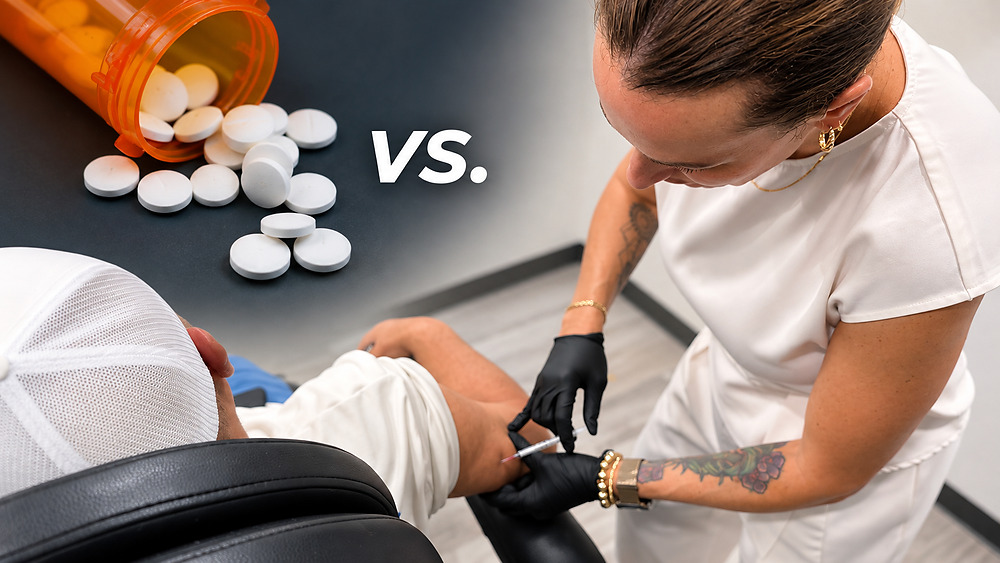
For years, the most common question about GLP-1 weight-loss medication was how to get comfortable with a weekly injection. That conversation changed when the FDA approved a once-daily semaglutide tablet for chronic weight management, sold as Wegovy tablets. Many people now ask a new question: is a pill easier, and should I switch?
The honest answer is that a tablet changes the routine, not the basic biology. The medicine is still semaglutide, it still works on appetite and fullness, and it still needs medical supervision. Whether a pill fits you depends on your mornings, your other medications, and how you have tolerated GLP-1 treatment so far.
Same medicine, different delivery
Semaglutide is the active ingredient in both the weekly Wegovy injection and the daily Wegovy tablet. Both act on GLP-1 receptors, which influence appetite, fullness, and how quickly the stomach empties. The tablet is a separate product with its own dosing schedule. It is not a weekly dose cut into seven pieces, and the doses are not interchangeable milligram for milligram.
That distinction matters if you are already on an injection. Moving from one form to the other is a prescribing decision, not something to work out from a dose chart online. Your provider decides whether a change makes sense and how to handle the transition.
The daily routine is stricter than many expect
The FDA label gives specific instructions. Take the tablet once a day in the morning on an empty stomach, with no more than 4 ounces of plain water. Swallow it whole. Then wait at least 30 minutes before eating, drinking anything else, or taking other oral medications.
For some people, that is easy. They wake up, take the tablet, shower, and eat later. For others, it collides with real life: coffee as soon as they wake, thyroid medication on its own timing, early shifts, or caring for children first thing. A weekly injection takes a few seconds once a week. A daily tablet asks for the same careful sequence every morning.
Before choosing, write down what your first hour looks like on a typical weekday and on a weekend. If the 30-minute wait would be broken often, say so. A routine you can follow consistently matters more than which form sounds more convenient.
Side effects look familiar
The most common side effects reported for the tablet resemble those of the injection: nausea, diarrhea, vomiting, constipation, and stomach discomfort, especially while the dose is being increased. A pill does not remove the gastrointestinal adjustment period. Eating smaller meals, slowing down, limiting greasy food, and staying hydrated still matter.
Serious warnings that apply to semaglutide also apply here. These include pancreatitis, gallbladder problems, and the thyroid C-cell tumor warning for people with a personal or family history of medullary thyroid carcinoma or MEN 2. Severe abdominal pain, persistent vomiting, or signs of dehydration need prompt medical attention.
Who might prefer a tablet, and who might not
A tablet may appeal to people who strongly dislike needles, travel often, or would rather not store pens. It may suit someone whose mornings are predictable and who already takes medications in a set order.
An injection may suit people who want one weekly step, have unpredictable mornings, take several morning medications, or have done well on their current plan. Feeling ready for a change is reasonable. Changing because something is new is not, on its own, a reason to change a plan that works.
Cost and coverage are separate questions
Insurance coverage for weight-management medication varies widely, and the tablet’s approval did not change any individual plan’s rules. Manufacturer pricing and savings programs can change. Before deciding, check your own coverage and current pricing rather than relying on figures quoted online or in older articles.
Harmony Med Spa’s medical weight-loss program includes the consultation, monitoring, and follow-up visits. Ask the team which GLP-1 medications the program currently offers, and how prescriptions and medication costs are handled for your situation.
Questions to bring to your consultation
- Is the tablet appropriate for my health history and current medications?
- How would my morning medications fit around the 30-minute wait?
- If I am already on an injection, would switching offer me a benefit?
- What side effects should prompt a call before my next visit?
- How will we judge whether the plan is working, beyond the scale?
- What does treatment cost me, including medication?
The form is only one part of the plan
Medication works best inside a plan that includes nutrition, protein intake, strength training, sleep, and regular check-ins. Whether you take a pill or an injection, those pieces still shape how you feel and what you keep long term. If you are curious about the oral option, book a consultation in Sarasota and bring your current medication list. The goal is not the newest format. It is the one you can use safely and consistently.
Frequently asked questions
Is the Wegovy pill the same drug as the Wegovy injection?
Both contain semaglutide, but they are separate products with their own dosing schedules. Doses are not interchangeable, so any switch should be planned by your prescriber.
How do you take the Wegovy pill?
The FDA label directs once-daily dosing in the morning on an empty stomach with up to 4 ounces of plain water, then waiting at least 30 minutes before food, other drinks, or other oral medicines.
Does the pill cause less nausea than the shot?
Not necessarily. Nausea, diarrhea, vomiting, and constipation are common with both forms, especially while the dose increases. Report persistent or severe symptoms.
Can I switch from my weekly injection to the pill?
Possibly, but it is a prescribing decision. Discuss your response to the injection, your morning routine, and your other medications before changing.
Is the pill covered by insurance?
Coverage depends on your plan. The approval did not change insurance rules, so confirm current coverage and pricing directly.
Does Harmony prescribe the Wegovy pill?
Ask the Harmony team which GLP-1 medications the medical weight-loss program currently offers and which option suits your history.
Sources and further reading
FDA prescribing information for Wegovy tablets: https://www.accessdata.fda.gov/drugsatfda_docs/label/2026/218316s007lbl.pdf
Harmony medical weight loss: https://www.harmonymedspafl.com/medical-weight-loss
Continue exploring
Personalized care in Sarasota
Ready to discuss your options?
A consultation connects the information in this guide to your health history, goals, timeline, and budget.
Ask about GLP-1 options at a consultation