
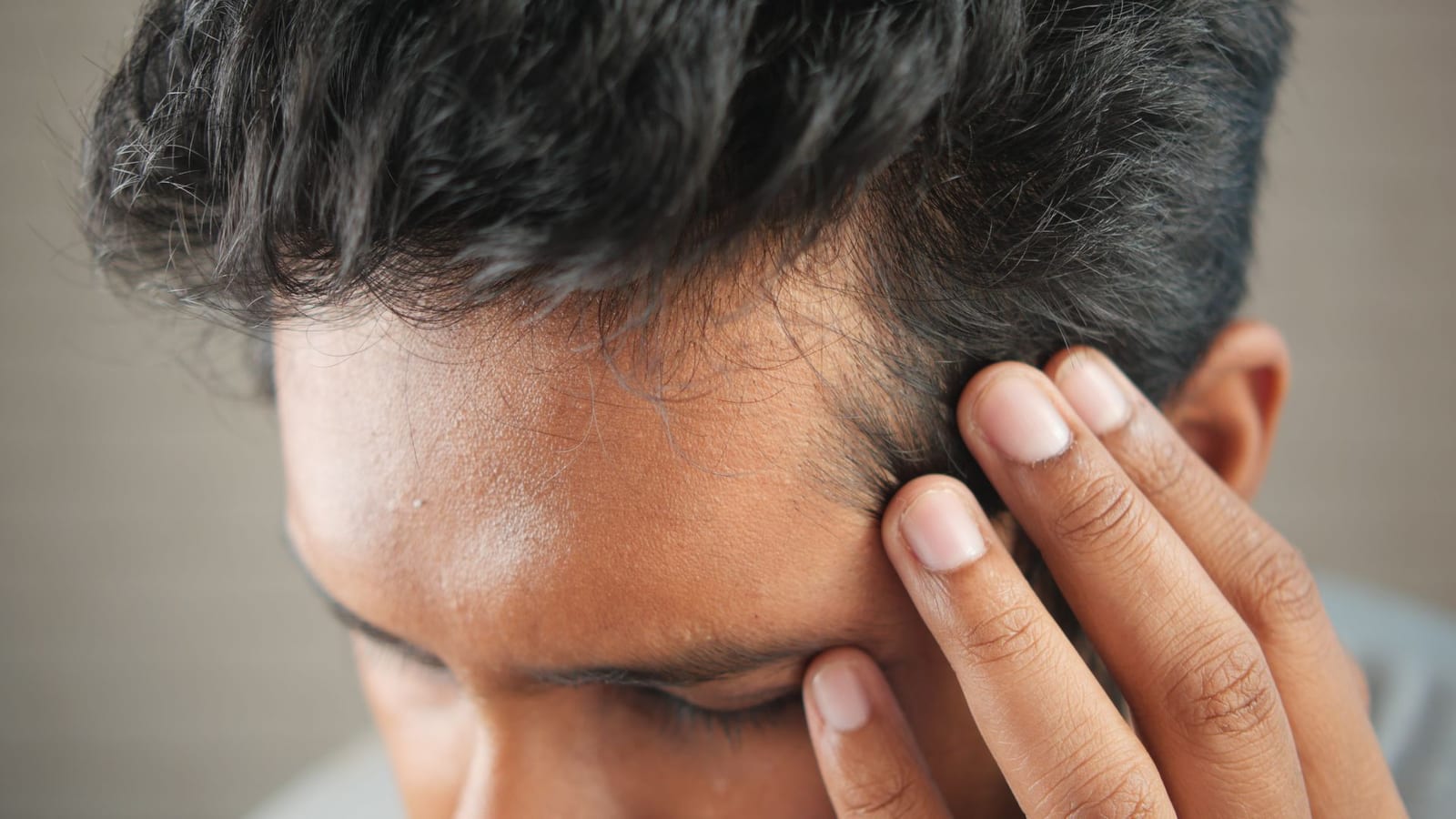
Many men notice hair loss gradually: a hairline that seems higher in photos, more scalp visible under bright light, or more hair in the shower drain. Male pattern hair loss is very common, and it often starts earlier than men expect. The most important thing to know is that most treatments work better at preserving hair you still have than at regrowing hair that is long gone. Acting early gives you more options.
Early signs to watch for
- A hairline receding at the temples, creating an “M” shape
- Thinning at the crown, sometimes noticed first in photos taken from above
- Hair that looks finer or less dense, even if you are not losing large amounts
- A wider part or more scalp showing under overhead lights
- Hair that does not grow as long as it used to
Comparing photos taken in the same lighting six months apart is one of the simplest ways to track change.
Pattern hair loss vs. shedding
Male pattern hair loss, also called androgenetic alopecia, is a gradual process influenced by genetics and hormones, especially dihydrotestosterone (DHT). Over time, affected follicles shrink and produce thinner hairs.
Shedding is different. Telogen effluvium is a temporary increase in hair fall that can follow illness, high fever, surgery, major stress, rapid weight loss, or certain medications. It often appears a few months after the trigger and is spread across the scalp. Some men have both at the same time.
Causes worth checking
Before choosing a treatment, it is worth ruling out other contributors:
- Thyroid problems
- Low iron or other nutritional gaps, especially with restrictive diets or rapid weight loss
- Medications, including some used for blood pressure, mood, or acne
- Testosterone or anabolic steroid use, which can accelerate pattern loss in susceptible men
- Scalp conditions, such as seborrheic dermatitis or psoriasis
Patchy hair loss, scarring, pain, or sudden loss should be evaluated by a medical provider or dermatologist.
Treatment options to discuss
Medications: Topical minoxidil and oral finasteride are long-standing, FDA-approved treatments for male pattern hair loss. They require ongoing use, and each has potential side effects that a prescriber should review with you.
In-office and regenerative-style treatments: Harmony Med Spa offers KeraFactor hair restoration, which combines scalp microneedling, red light therapy, and an at-home care routine. Treatments like this aim to support the scalp and hair growth environment and are often used alongside other approaches.
Hair transplant surgery may be considered for established, stable loss and is performed by surgical specialists.
Lifestyle factors: Adequate protein, managing stress, avoiding smoking, and gentle hair care do not cure pattern loss, but they support overall hair health.
Realistic timelines
Hair grows slowly. Most treatments take several months before you can judge whether they are working, and early results usually mean less shedding before visible density. Taking consistent photos helps you and your provider see progress objectively.
Questions to ask at a consultation
- Does my pattern look like genetic hair loss, shedding, or both?
- Should I have blood work first?
- Which treatments can be combined safely?
- What should I expect at three, six, and twelve months?
- What happens if I stop treatment?
Start while you have hair to protect
If you are noticing changes, earlier is better than later. Harmony Med Spa in Sarasota offers hair restoration consultations to review your pattern, history, and goals. If you also have fatigue, low libido, or other symptoms, ask whether a broader evaluation, including hormone testing, makes sense. Bring photos from a few years ago; they are often the best evidence of what has changed.
Frequently asked questions
What are the first signs of male pattern baldness?
A receding hairline at the temples, thinning at the crown, finer hair, or more scalp visible under bright light are common early signs.
Can thinning hair grow back?
Treatments generally work better at preserving existing hair than regrowing long-lost hair. Some thinning hair may thicken with treatment, which is why acting early helps.
Is hair loss caused by testosterone?
Pattern hair loss is linked to DHT, a hormone made from testosterone, plus genetics. Testosterone or steroid use can accelerate loss in susceptible men.
What is KeraFactor?
At Harmony, KeraFactor hair restoration combines scalp microneedling, red light therapy, and at-home care to support the scalp and hair growth.
How long until treatment shows results?
Most hair treatments take several months before results can be judged. Consistent photos help track progress.
When should I see a doctor about hair loss?
Seek evaluation for sudden, patchy, painful, or scarring hair loss, or loss with other symptoms such as fatigue or weight change.
Sources and further reading
American Academy of Dermatology: hair loss types and diagnosis: https://www.aad.org/public/diseases/hair-loss/types
Harmony hair restoration: https://www.harmonymedspafl.com/hair-restoration
Continue exploring
Personalized care in Sarasota
Ready to discuss your options?
A consultation connects the information in this guide to your health history, goals, timeline, and budget.
Book a hair restoration consultation