
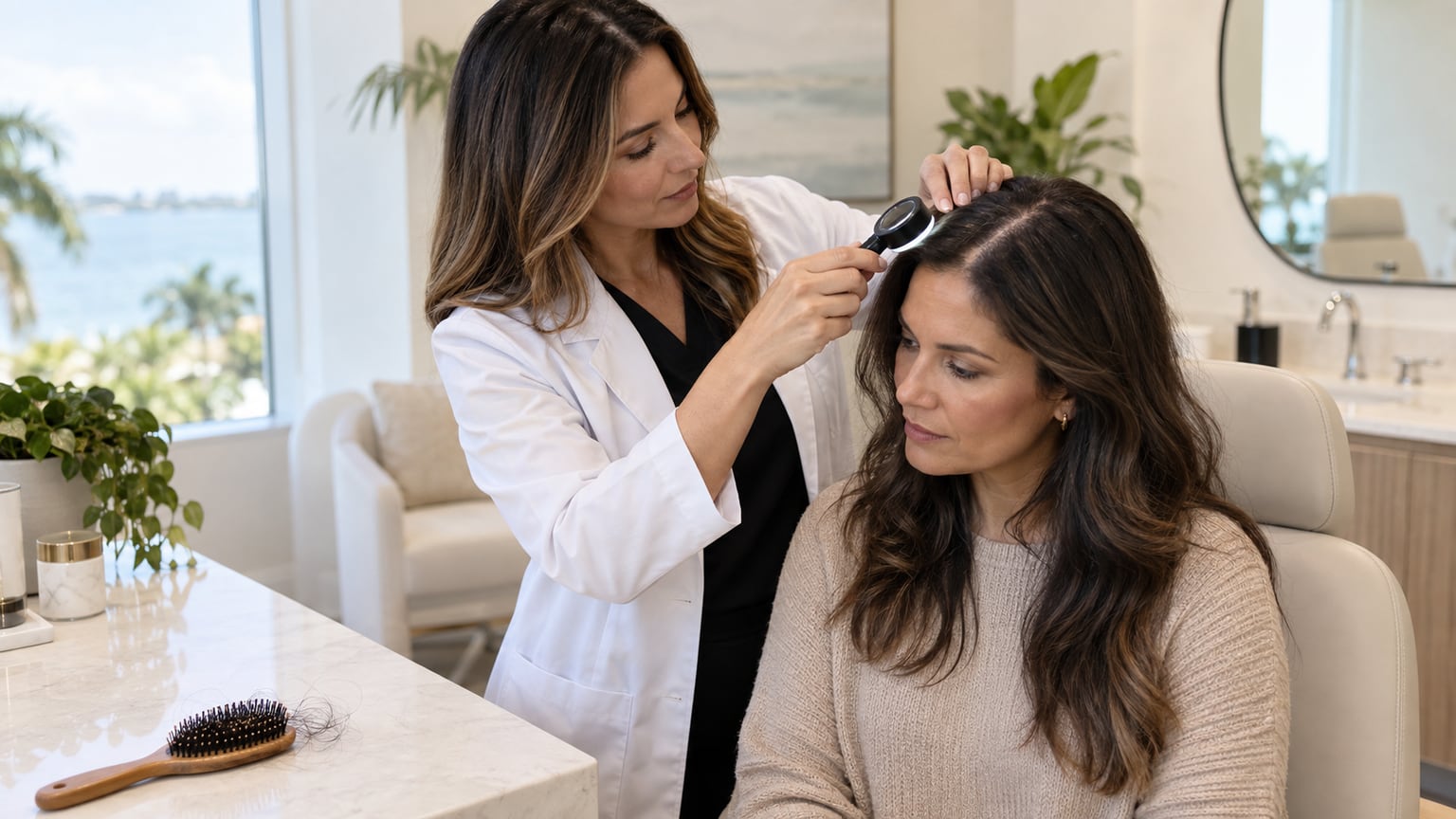
A shower drain suddenly holding more hair can feel alarming, but more hair fall does not always mean permanent loss. Hair shedding describes an increased number of hairs leaving the scalp, often after a physical or emotional stressor. Hair loss describes a broader group of problems in which growth slows, follicles shrink, hair breaks, or distinct areas become thinner. Some people experience both at the same time. The useful question is not simply, “How much hair am I losing?” It is, “What pattern is happening, when did it begin, and what changed beforehand?”
The practical difference between shedding and hair loss
The American Academy of Dermatology notes that losing roughly 50 to 100 hairs a day can be normal. Excessive shedding, often called telogen effluvium, happens when a larger-than-usual group of hairs shifts into the resting and shedding phase. It can follow a high fever, major illness, surgery, childbirth, significant weight loss, medication change, or sustained stress. The trigger may occur two or three months before the shedding becomes obvious, which is why the connection is easy to miss.
Progressive hair loss often looks different. A widening part, gradually receding hairline, thinner ponytail, increasingly visible crown, or small defined patches may suggest that the issue is not only temporary shedding. Breakage can create short uneven pieces rather than full-length shed hairs. Inflammation, scaling, tenderness, or scarring can point toward a scalp disorder that needs medical attention. No single photograph or online checklist can diagnose the cause.
Patterns worth noticing before your consultation
- Diffuse shedding from the entire scalp, especially after a recent stressor
- A widening center part or gradual thinning at the crown
- A receding hairline or thinning at the temples
- Round or oval smooth patches
- Broken hairs at different lengths
- Redness, scale, pustules, pain, or intense itching
- Loss involving the eyebrows, lashes, or other body hair
Why the timeline often reveals more than the hairbrush
Create a simple three-to-six-month timeline. Include illnesses, fever, surgery, pregnancy or postpartum changes, rapid weight change, restrictive dieting, new prescriptions, stopped medications, hormone changes, unusually stressful periods, and new hairstyles or chemical services. Bring the names of supplements and hair products as well. This history helps a qualified clinician decide whether a supportive cosmetic program is reasonable or whether laboratory testing, dermatology, or another medical evaluation should come first.
When to seek medical evaluation first
Prompt evaluation is sensible when hair loss is sudden, patchy, rapidly worsening, painful, scar-like, or accompanied by scalp inflammation. It also matters when shedding occurs with fatigue, unexplained weight change, menstrual changes, fever, a new rash, or other systemic symptoms. Do not stop a prescription because you suspect it is affecting your hair; contact the prescribing clinician. A med-spa consultation can identify concerns and help organize questions, but it should not replace diagnosis of a medical condition.
A responsible hair-restoration plan starts by asking why the change is happening. Starting a procedure before that question is addressed can waste time and make progress harder to judge.
Where cosmetic hair restoration may fit
Harmony Med Spa offers a non-surgical program that may combine scalp microneedling, professional KeraFactor serum, red light therapy, and at-home scalp care. The approach is designed for consistency over time, not an instant change. It may be discussed with adults who have gradual thinning and a healthy treatment area after appropriate screening. It is not a universal answer for autoimmune, scarring, infectious, medication-related, nutritional, or hormone-related causes.
If a clinician believes a cosmetic plan is appropriate, agree on what will be measured. Standardized photographs should use the same lighting, angle, hair length, part, and styling. Decide when progress will be reviewed and what would trigger a referral or change in plan. Hair cycles move slowly, so weekly mirror checks often create more anxiety than useful information.
How to prepare for a useful hair consultation
- Write down when the change began and whether it was sudden or gradual.
- List health events and stressors from the prior six months.
- Bring current medications, supplements, and topical hair products.
- Take a few unfiltered photos under consistent lighting.
- Note scalp symptoms such as itching, burning, tenderness, or scale.
- Ask what the provider can assess and when dermatology or laboratory testing is appropriate.
Frequently asked questions
How can I tell if I am shedding more than normal?
A noticeable increase in full-length hairs on the brush, pillow, clothing, or shower drain can suggest increased shedding, but counting individual hairs is rarely precise. Compare the change with your normal pattern and discuss its duration and possible triggers with a qualified professional.
Can rapid weight loss cause temporary hair shedding?
Yes. Significant or rapid weight change can be followed by telogen effluvium in some people. Nutrition, the pace of weight loss, medications, hormones, illness, and genetic hair loss may also contribute, so persistent shedding deserves evaluation.
Does temporary shedding always grow back?
Many cases improve after the trigger resolves, but the timeline varies and some people have more than one cause. Ongoing shedding, visible pattern change, scalp symptoms, or uncertainty should be assessed rather than assumed to be temporary.
Can someone have hair shedding and pattern hair loss together?
Yes. A temporary shedding event can make previously subtle pattern thinning more noticeable. That is one reason a careful history and scalp evaluation are more useful than choosing treatment from a single symptom.
Should I start supplements when my hair begins shedding?
Not automatically. Supplements are most useful when they address a documented need, and excess amounts of some nutrients can be harmful or worsen hair concerns. Review products, doses, medications, and relevant testing with an appropriate clinician.
Can Harmony Med Spa diagnose every cause of hair loss?
No. Harmony can perform a consultation, review candidacy for its cosmetic hair-restoration services, and recommend medical follow-up when needed. A dermatologist or another medical professional may be required to diagnose and treat the underlying cause.
If you are seeing more hair fall or a visible change in density, bring your timeline, product list, and questions to a hair-restoration consultation at Harmony Med Spa in Sarasota. The goal of the first visit is clarity: understand the pattern, identify reasons to seek medical evaluation, and decide whether a measured non-surgical plan fits.
Continue exploring
Personalized care in Sarasota
Ready to discuss your options?
A consultation connects the information in this guide to your health history, goals, timeline, and budget.
Schedule a hair consultation