
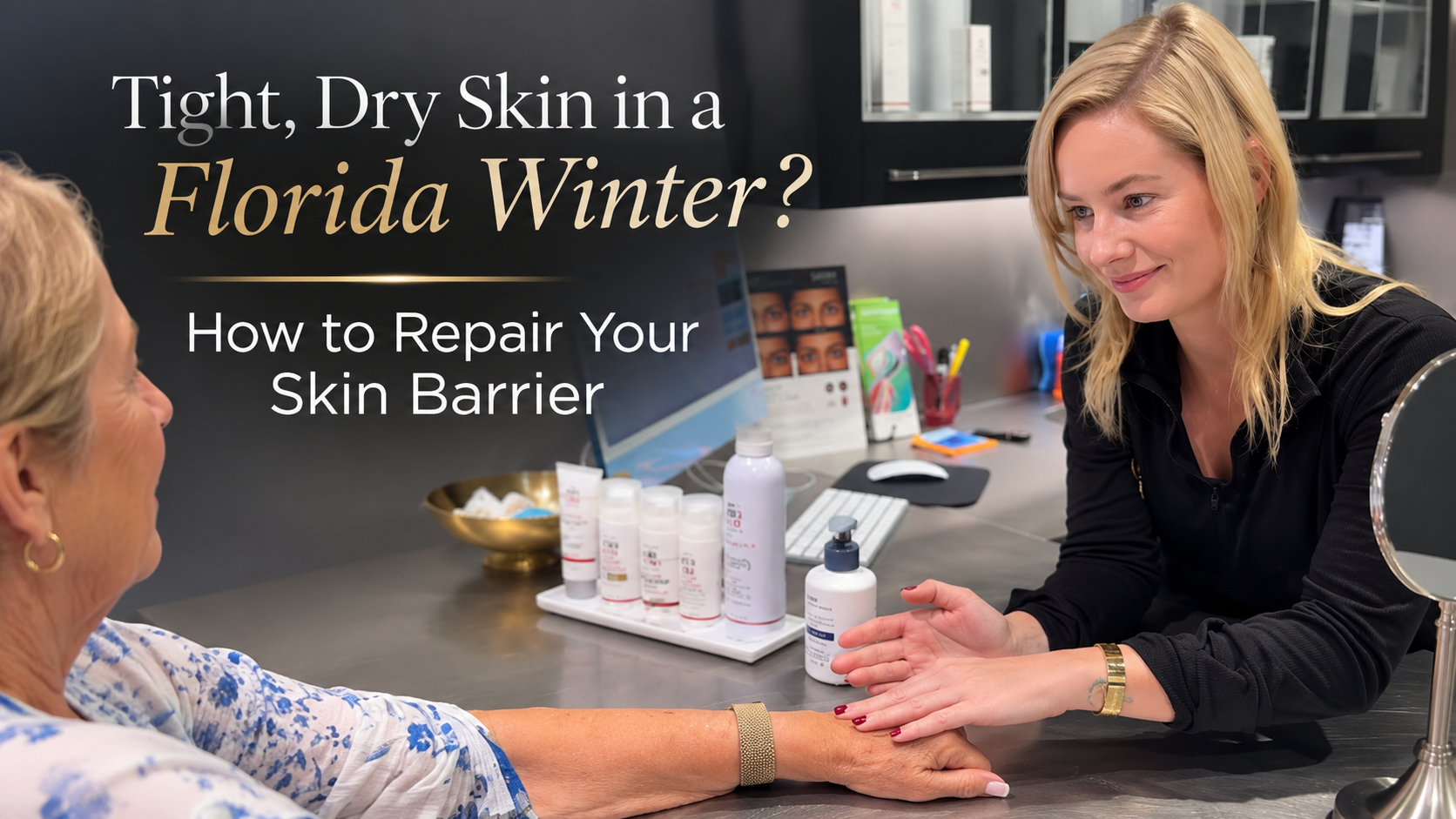
Sarasota winters rarely bring snow, but they can still be hard on skin. Cooler, drier fronts, constant air conditioning or heating, hot showers, holiday travel, and an ambitious new skincare routine can add up. If your skin suddenly stings when you apply products, feels tight after cleansing, or looks red and flaky, your skin barrier may need attention.
What the skin barrier does
The outermost layer of skin acts like a wall. Skin cells are the bricks, and natural lipids such as ceramides, cholesterol, and fatty acids are the mortar between them. That structure keeps water in and irritants out. When it is disrupted, water escapes more easily and products that once felt fine can begin to burn.
Signs your barrier may be stressed
- Tightness, especially after washing
- Stinging or burning with products that used to be comfortable
- Redness, rough patches, or flaking
- Skin that feels both oily and dehydrated
- More breakouts or irritation than usual
These signs can overlap with eczema, rosacea, allergic contact dermatitis, or infections. If symptoms are severe, spreading, painful, or not improving after a couple of weeks of a gentle routine, see a medical provider.
Common causes, even in Florida
- Over-exfoliation: combining scrubs, acids, retinoids, and peels too often is one of the most common culprits
- Hot water and harsh cleansers that strip natural oils
- Air conditioning, heating, and air travel, which lower humidity around your skin
- Sun and wind exposure on the water or the beach
- Too many new products at once, which also makes it hard to identify a trigger
A simple reset routine
When your barrier is irritated, less is usually more. For one to two weeks, consider:
- A gentle, fragrance-free cleanser used once or twice daily with lukewarm water
- A moisturizer with barrier-supporting ingredients such as ceramides, glycerin, or hyaluronic acid, applied to slightly damp skin
- A broad-spectrum sunscreen every morning; mineral formulas are often better tolerated by sensitive skin
- Pausing exfoliating acids, scrubs, and strong retinoids until stinging settles
If you use a prescription product, do not stop it without asking the prescriber; they can tell you whether to reduce frequency instead. Reintroduce actives one at a time, a few nights per week, and watch how your skin responds.
What to avoid while healing
Skip new active ingredients, fragrance-heavy products, and physical scrubs. Avoid picking at flakes. Do not schedule a peel, laser, or microneedling while your skin is actively irritated; tell your provider about the irritation so treatment can be postponed or adjusted.
Where professional care helps
A professional can help you work out what triggered the problem and build a sustainable routine. Gentle, hydrating facials may be a good choice once acute irritation has settled. Medical-grade skincare can be matched to your skin rather than to trends. Chemical peels, RF microneedling, and lasers can address texture, tone, and aging, but timing matters, and a healthy barrier makes recovery smoother.
Winter is also good planning time
Fall and winter bring less intense sun, which makes it a popular time to plan corrective treatments such as lasers and peels. Starting with a calm, well-hydrated barrier sets you up for better results and an easier recovery.
Bring your routine to Harmony
At Harmony Med Spa in Sarasota, our skincare team can review the products you use, assess your skin, and recommend a simpler routine or in-office treatment that fits. Bring your products, or photos of their labels, to your visit. A stronger barrier often comes from doing less, more consistently.
Frequently asked questions
How long does it take to repair a damaged skin barrier?
Many people notice improvement within one to a few weeks of a gentle routine. Persistent or severe symptoms should be evaluated by a medical provider.
What ingredients help repair the skin barrier?
Moisturizers with ceramides, glycerin, hyaluronic acid, and other barrier-supporting ingredients are commonly recommended, along with daily sunscreen.
Should I stop my retinol?
Pausing over-the-counter retinoids while skin is irritated is common. Ask before stopping a prescription product.
Can I get a facial with a damaged barrier?
Tell your esthetician. A gentle, hydrating approach may be appropriate once irritation settles; stronger exfoliating treatments should wait.
Why is my skin dry in Florida?
Air conditioning, heating, hot showers, travel, sun, and over-exfoliation can all dry skin, even in a humid climate.
When should I see a provider?
If redness, burning, or flaking is severe, spreading, painful, or not improving after a couple of weeks, seek medical evaluation.
Sources and further reading
American Academy of Dermatology: dermatologists’ tips for relieving dry skin: https://www.aad.org/public/everyday-care/skin-care-basics/dry/dermatologists-tips-relieve-dry-skin
Harmony skincare treatments: https://www.harmonymedspafl.com/skincare
Continue exploring
Personalized care in Sarasota
Ready to discuss your options?
A consultation connects the information in this guide to your health history, goals, timeline, and budget.
Get a personalized skincare plan