
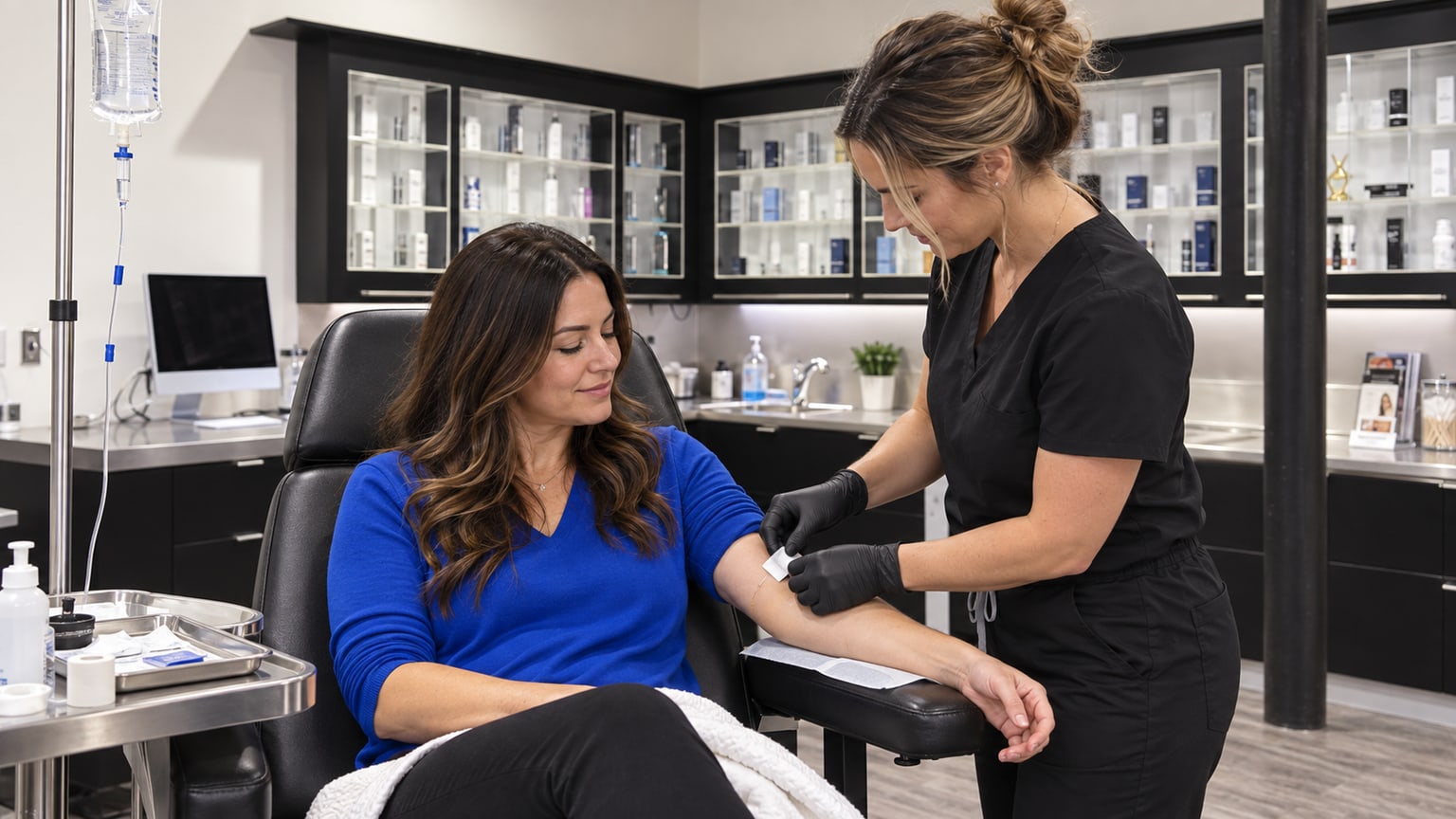
Most people leave a routine IV appointment thinking about hydration or their wellness goal, not the small catheter site on the arm. Yet aftercare is part of the treatment. Mild tenderness or a small bruise may occur after a peripheral IV, but worsening pain, spreading redness, marked swelling, fever, chest symptoms, or trouble breathing should not be dismissed as a normal detox response. A good IV experience includes screening before the drip, observation during it, clear discharge instructions, and a direct route to clinical help afterward.
Mild changes that can happen at the IV site
A tiny puncture mark, brief pressure sensitivity, or a small bruise can occur where the catheter entered the vein. Keeping the bandage on for the time recommended by the clinician and avoiding rubbing the area immediately afterward is usually enough. If the site continues to bleed, apply gentle pressure and contact the provider if it does not stop. Mild does not mean ignore it indefinitely: the area should settle rather than become progressively hotter, redder, harder, or more painful.
Swelling or burning during an infusion needs attention
Fluid can sometimes leave the vein and enter surrounding tissue, a problem commonly called infiltration. During an appointment, tell the clinician immediately about new burning, tightness, cool swelling, leaking, or significant pain near the catheter. The infusion should be assessed rather than simply slowed while symptoms continue. After leaving, increasing swelling, color change, numbness, blistering, or severe pain warrants prompt contact with the treating clinic or urgent medical evaluation depending on severity.
Symptoms that are not routine aftercare
- Trouble breathing, chest pain, fainting, facial or throat swelling, or a fast heartbeat
- Fever, chills, or feeling acutely ill after the infusion
- Spreading redness, warmth, drainage, a red streak, or worsening pain at the site
- Marked arm swelling, persistent bleeding, numbness, blistering, or skin color change
- Severe headache, confusion, repeated vomiting, or other rapidly worsening symptoms
Call emergency services for trouble breathing, chest pain, loss of consciousness, signs of a severe allergic reaction, or another rapidly developing emergency. For a concerning but non-emergency site change, contact the clinic promptly and send a clear photograph if requested. Do not rely on a social-media comment section to decide whether a reaction is serious.
The ingredient list changes the risk conversation
An IV is not one generic product. Saline, vitamins, minerals, antioxidants, and medications have different contraindications, doses, and possible reactions. Ask for the exact ingredients and amounts, where the product was obtained, who prescribed it, and why the combination fits your history. Tell the clinician about kidney, heart, or liver disease; pregnancy or breastfeeding; allergies; clotting problems; current medications; and prior infusion reactions. More ingredients do not automatically create more benefit.
What safer screening looks like
A credible clinic should confirm your identity, health history, medications, allergies, treatment goal, and vital signs as appropriate. The person placing and monitoring the IV should be trained for that role, use clean single-use supplies, and be able to respond to infiltration, fainting, allergic reactions, and emergencies. You should never feel pressured to choose a drip by its name alone or add an ingredient without understanding the reason and dose.
Simple aftercare once you are home
Follow the instructions given for the specific infusion. Keep the site clean, check it later that day, and resume food and fluids according to the provider's advice and your medical needs. Avoid assuming that feeling energetic means you should immediately push through an intense workout, sauna, alcohol, or prolonged heat exposure. If the IV was intended to address symptoms of illness or dehydration, remember that improvement does not identify the original cause and does not replace follow-up when symptoms persist.
The right aftercare instruction is specific enough to act on: what is expected, what is not, who to call, and when the situation is urgent.
Frequently asked questions
Is bruising after an IV normal?
A small bruise or mild tenderness can occur, but it should improve. Expanding bruising, continued bleeding, severe pain, numbness, or major swelling should be reported.
Why does my arm feel sore after IV therapy?
Minor irritation can follow catheter placement. Worsening pain, warmth, a hard or tender vein, spreading redness, drainage, or fever needs prompt clinical advice.
Can I exercise after an IV drip?
Ask the treating clinician because the answer depends on why you received the infusion, how you feel, and what was included. Do not use an IV to push through significant illness or concerning symptoms.
When should I call 911 after an IV?
Seek emergency help for trouble breathing, chest pain, fainting, facial or throat swelling, confusion, or another severe and rapidly worsening reaction.
Should I know every ingredient in my drip?
Yes. Ask for the name and dose of each ingredient and discuss allergies, medications, health conditions, and the evidence for the intended goal before treatment.
Does IV therapy replace medical care for dehydration or illness?
No. Serious dehydration, persistent vomiting, chest symptoms, confusion, infection, or worsening illness may require diagnostic testing and a higher level of medical care.
Harmony Med Spa's IV menu is organized around different wellness goals, but the safest choice still begins with an individual review. Before booking in Sarasota, ask what is in the infusion, who will assess you, how you will be monitored, and exactly whom to contact after you leave.
Continue exploring
Personalized care in Sarasota
Ready to discuss your options?
A consultation connects the information in this guide to your health history, goals, timeline, and budget.
Discuss IV therapy safety