
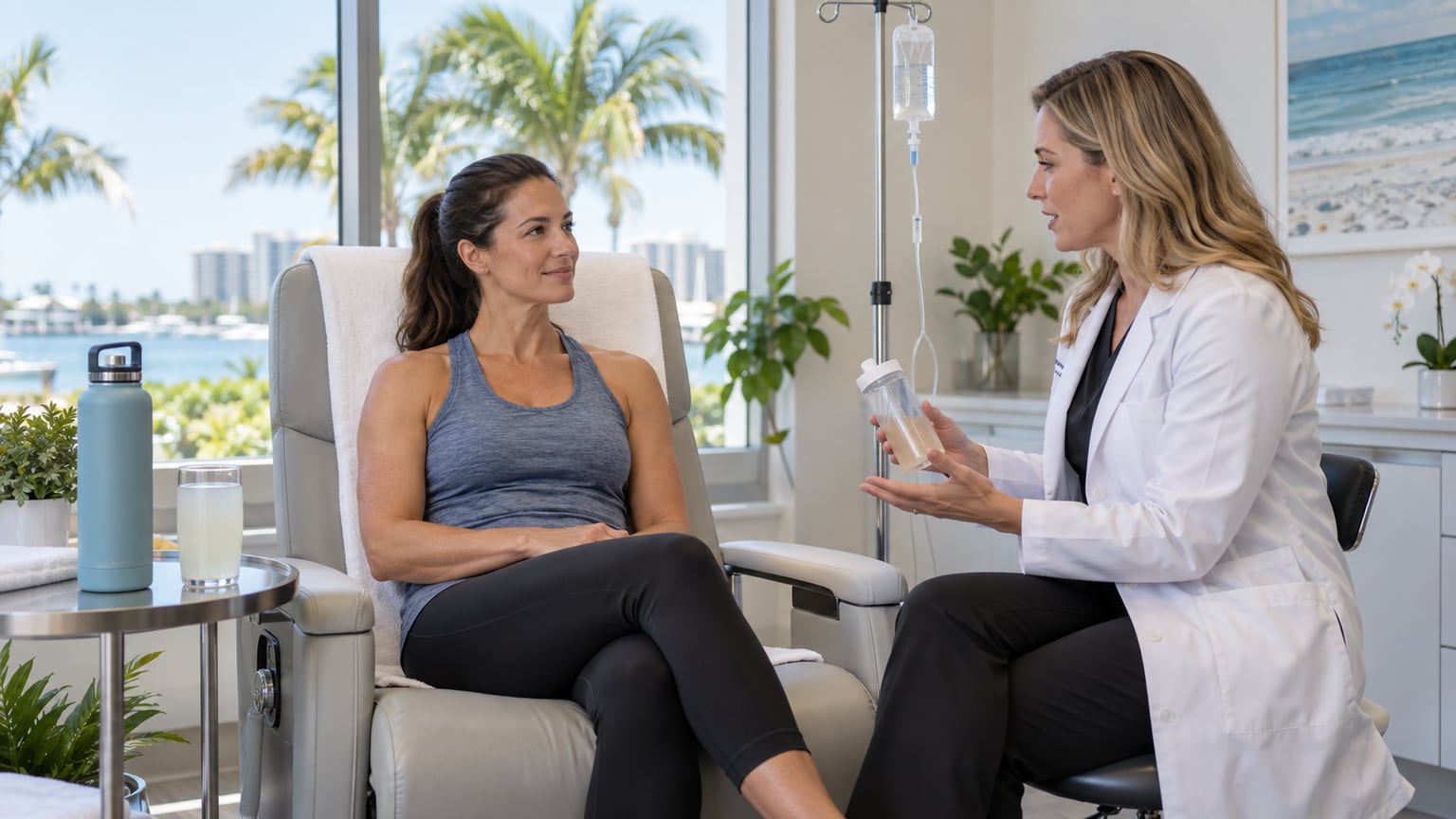
After a long flight, hot outdoor day, or demanding workout, it is tempting to ask which method hydrates “best.” The more useful question is whether you can drink and retain enough fluid, what you actually lost, how severe your symptoms are, and whether a medical problem could be involved. Water, food, and oral electrolyte solutions are practical first-line tools for many healthy adults. Intravenous fluid enters the bloodstream directly, but that does not make a wellness IV automatically necessary, risk-free, or superior for every recovery goal.
The short answer
- Routine hydration: water and normal meals are often enough.
- Heavy sweating or prolonged activity: an appropriate oral electrolyte drink may help replace fluid and salts.
- Unable to keep fluids down or showing severe symptoms: seek medical evaluation; this is not a routine spa decision.
- Elective wellness IV: may be considered after screening when the person understands ingredients, alternatives, limits, and risks.
How oral hydration works
The digestive system is designed to absorb water and nutrients. For ordinary daily needs, water and balanced meals usually provide what the body requires. During prolonged sweating, gastrointestinal losses, or extended heat exposure, a properly formulated oral rehydration or electrolyte drink can replace water plus sodium and other components. More electrolytes are not always better. High-sugar drinks, very salty formulas, and unnecessary supplements can be uncomfortable or inappropriate for some people.
What changes with IV hydration
An IV bypasses the digestive tract and delivers fluid directly into a vein. In hospitals, that route is important when a patient has severe dehydration, cannot drink, has uncontrolled vomiting, or needs closely managed treatment. A wellness IV is a different setting and purpose. A person may value the supervised appointment or prefer an available formulation, but convenience should not be confused with emergency treatment or proof of better outcomes in a healthy person who can drink normally.
Compare the practical tradeoffs
Oral hydration is inexpensive, needle-free, portable, and easy to adjust throughout the day. It requires the person to tolerate drinking and may take planning during long events or hot weather. An IV provides a measured volume during a monitored appointment, but it requires venous access, professional administration, time, screening, and payment. It can cause bruising, discomfort, infiltration, infection, vein irritation, or a reaction to an ingredient. Fluid and electrolyte loads can also be inappropriate for certain heart, kidney, blood-pressure, or metabolic conditions.
For exercise recovery, start with the basics
Recovery depends on more than fluid. Training load, sleep, carbohydrate and protein intake, heat acclimatization, illness, alcohol, medications, and the time available before the next session all matter. An IV cannot replace a recovery plan or turn an unsafe training schedule into a safe one. Ongoing fatigue, fainting, chest discomfort, unusual shortness of breath, confusion, severe muscle pain, or dark urine deserve medical attention rather than a wellness “boost.”
A better decision framework
- Name the goal: routine hydration, post-workout recovery, travel comfort, or a symptom that needs evaluation.
- Ask whether you can drink and keep fluids down normally.
- Review medical conditions, medications, supplements, allergies, pregnancy, and prior IV reactions.
- Request the exact IV ingredients, amounts, source, and reason for each component.
- Compare the cost, time, and risks with water, food, rest, and oral electrolytes.
- Know which symptoms should send you to urgent or emergency care instead.
How Harmony's Athlete IV fits into the conversation
Harmony Med Spa describes its Athlete IV around hydration and recovery goals for active adults. The name does not mean every athlete needs an IV or that it improves performance. A responsible visit should review the person's training, symptoms, health history, medications, and oral intake before recommending a formulation. Confirm the current ingredients at booking because menus and sourcing can change.
Frequently asked questions
Is an IV faster than drinking water?
IV fluid enters the bloodstream directly, but speed alone does not establish that an elective IV is necessary or better for a healthy person who can drink. The right route depends on symptoms, severity, health history, and clinical judgment.
Do I need electrolytes after every workout?
No. Water and regular meals may be enough after many workouts. Duration, heat, sweat loss, diet, and individual health affect whether an electrolyte drink is useful.
Can IV therapy treat severe dehydration?
Severe dehydration can be a medical emergency and should be evaluated in an appropriate medical setting. A routine wellness appointment is not a substitute for urgent assessment.
Who should be cautious about IV fluids?
People with certain heart, kidney, liver, blood-pressure, electrolyte, clotting, pregnancy-related, or allergy concerns may require additional caution or may not be candidates. Medications and supplements also matter.
Can I receive an IV before or after a race?
Discuss timing, health history, the event, heat exposure, oral intake, and race rules with qualified professionals. An IV should not mask concerning symptoms or replace a safe hydration and recovery plan.
What should I ask before choosing an IV?
Ask for the exact ingredients and doses, expected benefit, evidence and limitations, possible interactions, who prepares and administers it, how you will be monitored, and what symptoms require stopping.
If you are comparing oral hydration with an elective IV in Sarasota, start with the goal and the safest reasonable option. Harmony Med Spa can review its current IV menu and your candidacy, while urgent or persistent symptoms should be evaluated in the appropriate medical setting.
Continue exploring
Personalized care in Sarasota
Ready to discuss your options?
A consultation connects the information in this guide to your health history, goals, timeline, and budget.
Discuss your hydration options