
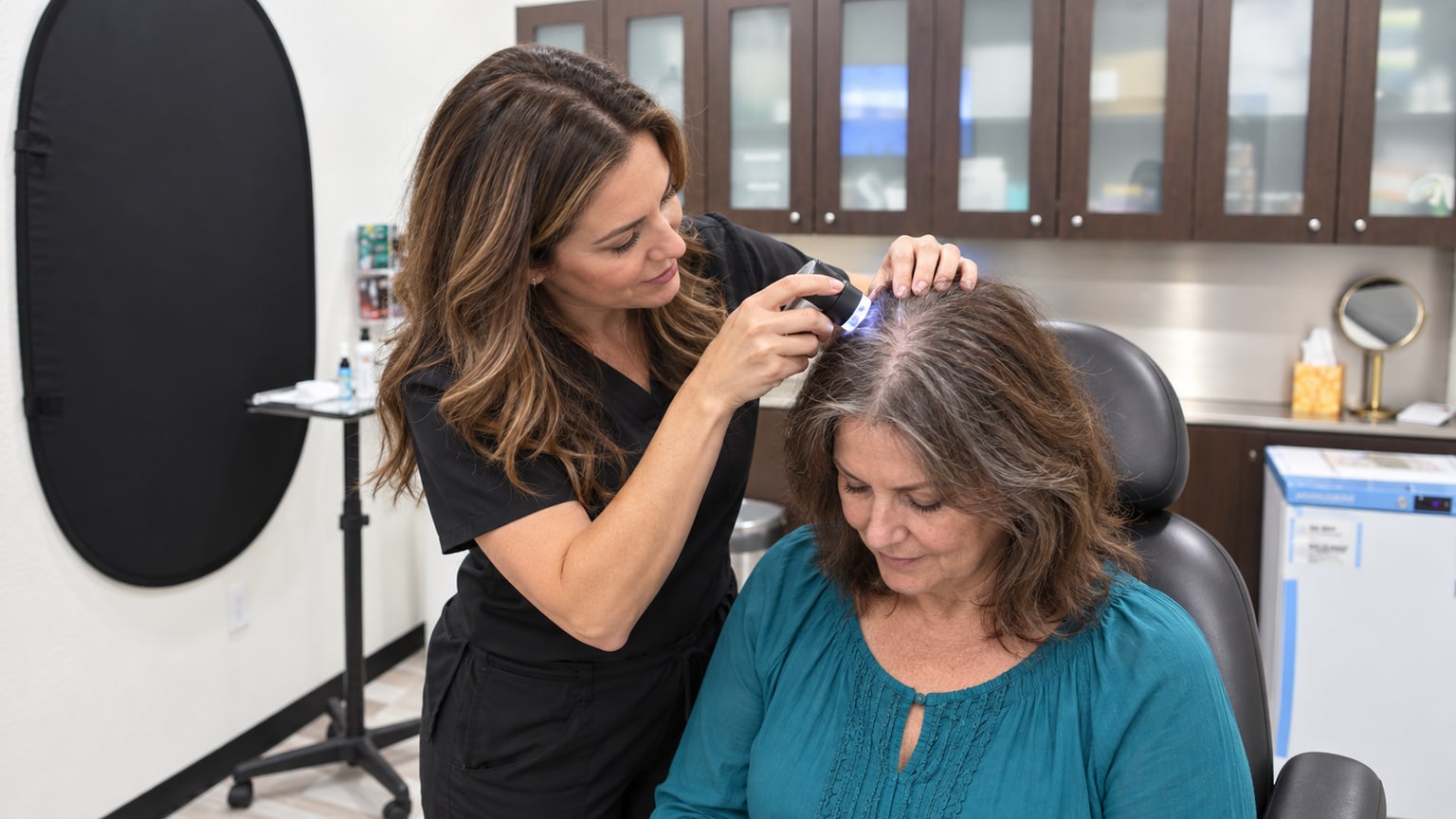
A ponytail that feels smaller, a widening center part, or more scalp showing in photographs can become noticeable during perimenopause or after menopause. The timing makes it tempting to blame every change on estrogen, but hair thinning in midlife rarely has only one possible explanation. Female-pattern hair loss, temporary shedding after illness or stress, thyroid disease, low iron, rapid weight change, medication effects, scalp inflammation, and damaging styling practices can overlap. That is why the best first step is not buying the strongest serum online. It is building a clear picture of what changed and deciding whether medical evaluation should come before cosmetic hair restoration.
Start with the pattern, not the number of hairs in the shower
Female-pattern hair loss often develops gradually. The part may broaden, the crown may look less dense, and the scalp can become easier to see under overhead light while the frontal hairline remains partly preserved. Temporary shedding is usually more diffuse and may begin a few months after fever, surgery, major stress, rapid weight loss, a restrictive diet, or a medication change. A smooth patch, recession at the temples, broken hairs, scalp pain, redness, heavy scale, or loss of eyebrows deserves a different level of attention. Photographs taken monthly in the same light and from the same angle are more useful than repeatedly counting hairs.
Where hormone changes may fit
Hair follicles respond to a complex mix of genetics, age, hormones, health, and local scalp conditions. The American Academy of Dermatology notes that female-pattern hair loss becomes more common after menopause and that hormones may play a role. That does not mean a single hormone test explains the scalp or that hormone therapy is automatically a hair-loss treatment. Symptoms such as hot flashes, sleep disruption, cycle changes, or vaginal symptoms belong in a broader menopause conversation, while the hair pattern still needs its own assessment.
What a careful review should cover
- When the change began and whether it is steady, episodic, or rapidly worsening
- Recent illness, surgery, emotional stress, pregnancy history, or substantial weight change
- Prescription medicines, over-the-counter products, and supplements started or stopped
- Protein intake, restrictive eating, iron history, and gastrointestinal symptoms
- Menstrual or menopause symptoms, thyroid history, and family pattern of thinning
- Bleaching, extensions, tight styles, heat, chemical processing, and scalp irritation
Testing should answer a question
Laboratory testing is not identical for every person. A clinician may consider blood counts, iron stores, thyroid testing, or other studies when the history and symptoms support them. Broad panels without a clinical question can create confusing borderline results and unnecessary supplements. Bring prior results, a complete medication list, and the names and doses of hair products or vitamins. Do not start high-dose biotin right before testing without asking your clinician because some supplements can interfere with certain laboratory assays.
When a dermatology evaluation should come first
Seek prompt medical evaluation for sudden patches, rapid progression, shiny or scar-like skin, pustules, significant pain, intense itching, or hair loss accompanied by unexplained fatigue, fever, weight change, or other new symptoms. Scarring forms of hair loss can cause permanent follicle damage, so delaying diagnosis matters. A responsible med-spa provider should be comfortable pausing a cosmetic plan and referring when the pattern falls outside routine supportive care.
Where a hair-restoration program may help
Once major medical causes and red flags have been addressed, a cosmetic program may focus on scalp condition, consistent home care, and treatments intended to support the appearance of density. Harmony Med Spa offers a KeraFactor-based plan that may combine scalp microneedling, red-light therapy, and at-home care for appropriate candidates. It should be discussed as a series rather than a one-visit rescue. Baseline photographs, a consistent part location, and realistic checkpoints help separate true change from different lighting or styling.
The most useful promise in hair restoration is not instant regrowth. It is a clear plan for what is being treated, how progress will be measured, and when the plan should be reconsidered.
Frequently asked questions
Is hair thinning normal during menopause?
It is common, but common does not mean every case has the same cause. Gradual female-pattern thinning may become more noticeable, while illness, stress, nutrition, thyroid conditions, medication changes, and scalp disorders can also contribute.
Can hormone therapy regrow hair?
Hormone therapy should be prescribed for an appropriate menopause or hormone-related indication, not assumed to be a universal hair-growth treatment. Hair concerns and hormone symptoms need individual evaluation.
What does female-pattern hair loss look like?
It often appears as gradual thinning over the crown or a widening part. Other conditions can look similar, so pattern alone does not confirm a diagnosis.
Should I take iron or biotin for thinning hair?
Not automatically. Iron is most useful when deficiency is present, and unnecessary supplements can cause side effects or interfere with testing. Review doses with a qualified clinician.
How long does a cosmetic hair-restoration plan take?
Hair cycles are slow. Meaningful evaluation usually requires consistent care and standardized photographs over several months, with the exact timeline depending on the cause and treatment.
When should I see a dermatologist?
Arrange evaluation for sudden, patchy, painful, inflamed, or rapidly progressive loss; shiny or scar-like areas; eyebrow loss; or hair changes accompanied by other unexplained symptoms.
Hair thinning in midlife deserves more than a guess based on age. Bring a timeline, photographs, medication list, and honest description of health changes to your consultation. Harmony Med Spa in Sarasota can discuss whether its supportive hair-restoration program fits the pattern—and when a medical or dermatology evaluation should take priority.
Continue exploring
Personalized care in Sarasota
Ready to discuss your options?
A consultation connects the information in this guide to your health history, goals, timeline, and budget.
Schedule a hair consultation